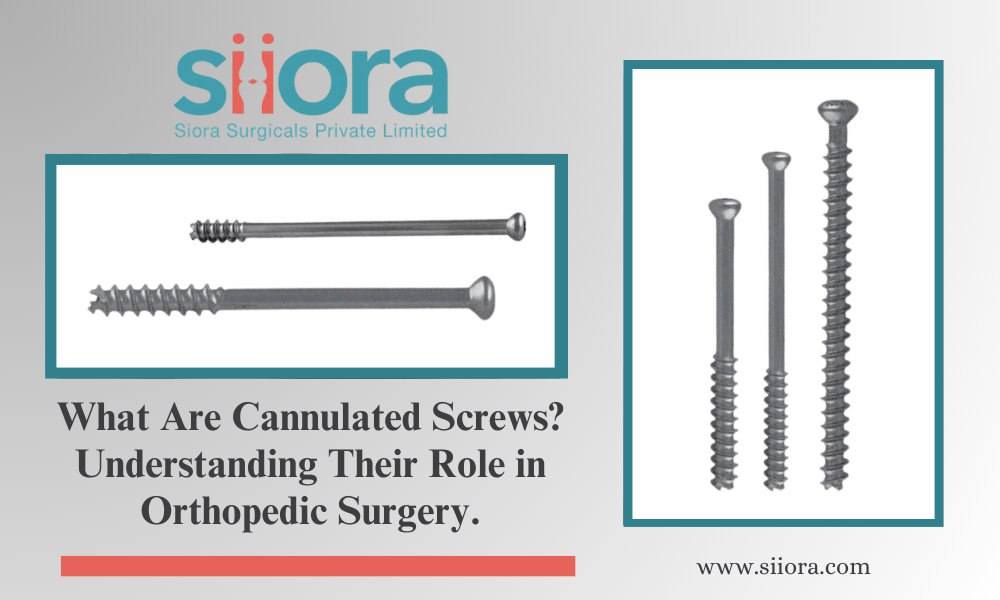
When it comes to orthopedic surgery, medical advancements have revolutionized patient care, offering innovative solutions for complex bone injuries. Among these advancements, cannulated screws stand out as a vital tool in modern orthopedic procedures. Let’s explore what they are, how they function, and why they play such a crucial role in bone healing and repair.
Understanding Cannulated Screws
Cannulated screws are a specialized type of surgical screw designed with a hollow center, allowing them to be guided over a wire during insertion. This hollow core is a game-changer, as it enables surgeons to position the screw with precision, minimizing the risk of misalignment and ensuring a more stable fixation.
The term “cannulated” comes from the word “cannula,” which refers to a tube-like structure. In the case of these screws, the hollow design accommodates a guide wire that helps surgeons navigate complex anatomical structures with accuracy. This design makes them particularly useful in delicate or hard-to-reach areas, where precise placement is critical.
How Cannulated Screws Work?
The surgical process involving Herbert cannulated screws typically begins with the insertion of a guide wire into the fractured bone. This wire acts as a roadmap, leading the screw to the intended location. Once the wire is in place, the surgeon carefully threads the cannulated screw over the wire, gradually securing the fractured bone fragments.
This guided approach allows for minimal disruption to surrounding tissues, reducing the need for larger incisions and promoting faster healing times. The ability to insert the screw with such accuracy makes it an ideal choice for treating fractures in smaller or more fragile bones, such as those in the wrists, ankles, or pelvis.
Applications of Cannulated Screws in Orthopedic Surgery
Cannulated screws are commonly used in a variety of orthopedic procedures, including:
- Fracture Fixation: They are widely used to stabilize fractures, especially in areas with complex anatomy, like the hip, femur, or collarbone.
- Joint Fusion: Surgeons may use these screws to promote bone fusion in procedures aimed at relieving chronic pain or correcting deformities.
- Bone Grafts: In cases where a bone graft is required, cannulated screws help secure the graft material, facilitating proper integration with existing bone tissue.
- Ligament Repairs: They can also assist in reattaching ligaments to bones, restoring joint stability after injury.
The Benefits of Using Cannulated Screws
The use of cannulated screws offers several advantages that contribute to their popularity in orthopedic surgery:
- Precision and Accuracy: The guide wire system allows for exact screw placement, reducing the risk of complications and improving surgical outcomes.
- Minimally Invasive: Smaller incisions and less tissue disruption lead to quicker recovery times and lower infection risks.
- Versatility: These screws come in various sizes and lengths, making them adaptable to different bone structures and fracture types.
- Strength and Stability: Cannulated screws provide robust fixation, promoting effective bone healing and reducing the likelihood of re-injury.
Post-Surgical Recovery and Considerations
While cannulated screws are highly effective, patient recovery still depends on factors like the injury’s severity, overall health, and adherence to post-operative care. After surgery, patients may need to avoid bearing weight on the affected limb, participate in physical therapy, and follow their surgeon’s guidelines to ensure optimal healing.
In some cases, the screws may remain in place permanently, while in others, they might be removed once the bone has fully healed. Surgeons will make this decision based on the patient’s unique circumstances and long-term orthopedic health.
Final Thoughts
Cannulated screws represent a significant advancement in orthopedic surgery, offering patients a safer, more efficient path to recovery. Their innovative design, coupled with the ability to enhance surgical precision, has made them a go-to solution for many orthopedic conditions. By understanding how these screws work and the benefits they provide, patients can feel more informed and confident as they navigate their healing journey.
If you or a loved one are facing orthopedic surgery, don’t hesitate to ask your healthcare provider about the use of cannulated screws and whether they’re the right option for your treatment plan. Knowledge is empowering, and being well-informed can make all the difference on the road to recovery.
Looking to be a trustworthy orthopedic distributor in Lebanon? Contact Siora Surgicals Pvt. Ltd., a renowned orthopedic manufacturer in India. The company owns an advanced production facility in the RAI District, Sonepat, Haryana, and maintains a huge inventory of CE-certified trauma implants.
 trauma implants manufacturers