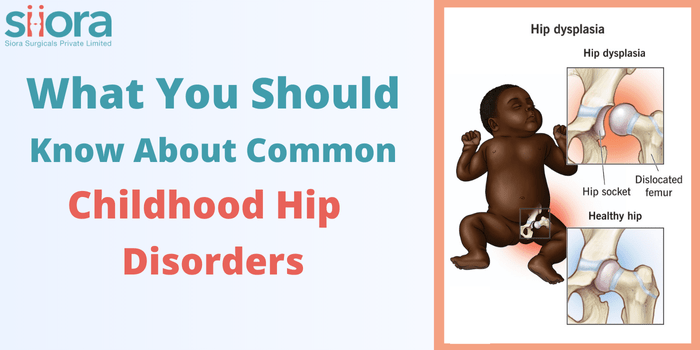
Our kids are full of boundless energy, always ready to run, jump, and climb. But when that playful gait is replaced by a limp or a pained expression, it can be a cause for concern. Hip pain, thankfully, isn’t as common in children as it is in adults. However, a few specific disorders can affect young hips, impacting their development and causing discomfort. In this post, we will have a quick look at the common hip condition seen in childhood.
To get an international standard range of orthopedic devices, create an Orthopedic Implant Company List in India.
Common Hip Disorders in Childhood
Here’s a look at some of the most common childhood hip disorders to be aware of:
Developmental Dysplasia of the Hip (DDH)
In newborns, the hip socket (acetabulum) may be shallow or underdeveloped, causing the ball of the femur (thigh bone) to slip partially in and out (subluxation) or completely out of the socket (dislocation). DDH is more common in girls and breech babies (born buttocks-first). Early diagnosis and treatment with a harness or splint are crucial to ensure proper hip development.
Slipped Capital Femoral Epiphysis (SCFE)
This condition affects teenagers, typically between 10 and 16 years old. The growth plate, a weaker area near the top of the thigh bone, weakens and slips, causing pain, limping, and limited hip movement. SCFE is more common in overweight or obese children and those with certain hormonal conditions. Treatment usually involves surgery to pin the bone fragments back in place.
Legg-Calve-Perthes Disease
This condition, affecting children between 4 and 8 years old, disrupts blood flow to the ball of the femur. This lack of blood supply weakens the bone, causing it to fragment and potentially deform. A limp and groin pain are common symptoms. Treatment often involves physical therapy, bracing, or surgery to reshape the femoral head.
Irritable Hip Syndrome
This is a catch-all term for hip pain in children aged 3 to 10 years old. Unlike the other conditions, there’s no identifiable structural abnormality. It’s thought to be caused by overuse or inflammation in the surrounding muscles and tendons. Limping, pain with activity, and a decreased range of motion are common signs. Treatment usually focuses on reducing activity, physical therapy, and pain management.
Septic Arthritis
This is a serious infection in the hip joint, which can occur at any age. It’s caused by bacteria or viruses entering the joint, causing severe pain, swelling, fever, and difficulty moving the hip. Early diagnosis and treatment with antibiotics are crucial to prevent hip damage.
What Are the Signs to Watch Out For?
While some hip problems might be obvious, it’s important to be aware of the subtle signs that could indicate an underlying issue:
- Limping or a limp that comes and goes
- Pain in the groin, thigh, or buttock
- Difficulty walking, running, or climbing stairs
- Reduced range of motion in the hip
- Leg length discrepancy
- Clicking or popping sounds in the hip
Early Detection is Key
If you notice any of these signs in your child, consult a doctor. Early diagnosis and treatment of hip disorders are essential to prevent long-term complications like hip dysplasia, arthritis, and gait abnormalities.
Remember, a healthy hip is a happy hip, and that translates to a happy, active child! By being aware of these common conditions and their symptoms, you can help ensure your little one keeps exploring the world with a spring in their step. For technological advances in the orthopedic industry and to learn about recent research, visit the conference organized by the British Orthopedic Association 2024.
 trauma implants manufacturers
Leave a comment